
Posted on: 19 March 2026
Maritime London ran a live webinar on 17 March 2026 entitled “Strait of Hormuz Briefing: Vessel Intelligence, Charterparty Implications, War Risks Market Response”.
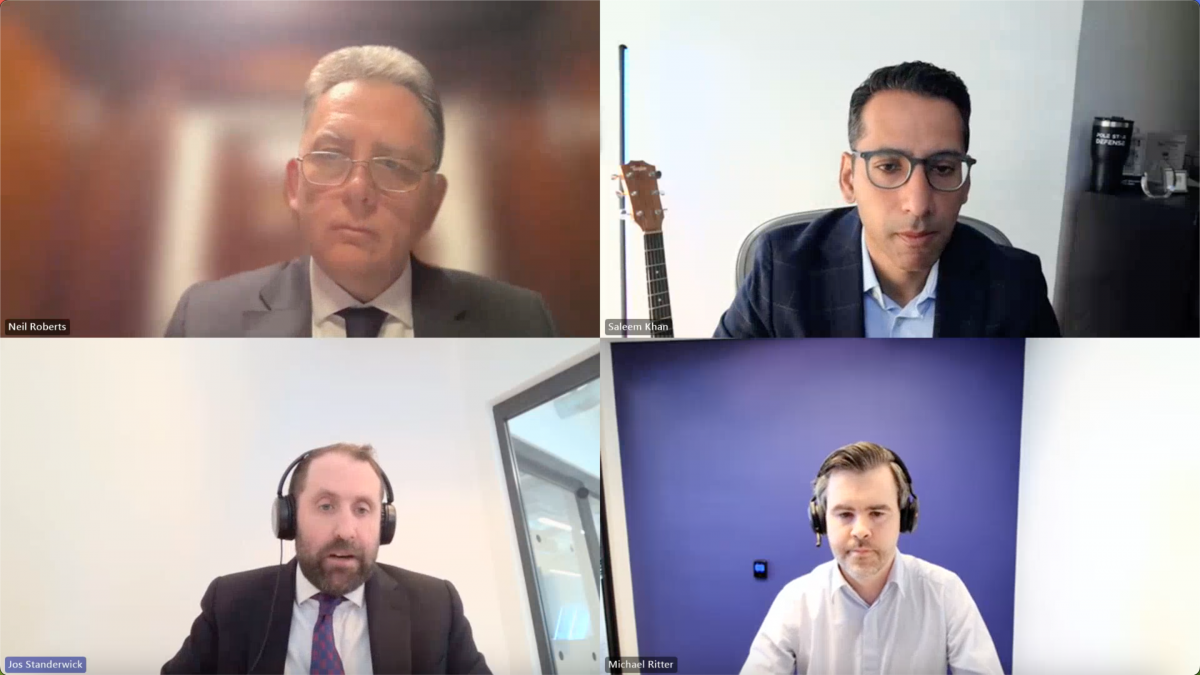
The speakers included Saleem Khan, Chief Data & Analytics Officer of Pole Star Global, Michael RitterICHAEL RITTER, Partner at HFW and Neil Roberts, Head of Marine and Aviation at Lloyd’s Market Association (LMA) provided an update to over 400 live callers on the escalating crisis in the Strait of Hormuz and its implications for vessel safety, contractual obligations, and war‑risk insurance.
Opening the session, Jos Standerwick, who hosted the webinar and moderated the discussion, highlighted widespread media inaccuracies and the importance of clarifying operational realities in this rapidly evolving environment.
Saleem Khan of Polestar Global reported that more than 2,500 vessels and 20,000 seafarers are currently trapped in the Persian Gulf. Legitimate trade flows have collapsed from $1.5bn/day to near zero following the February 28 attacks. AIS disruptions—including spoofing, jamming and deliberate disabling—affect around 10% of vessels, with an estimated 70–100 ships actively spoofing, largely associated with the Iranian dark fleet. Twenty‑six merchant vessels have been attacked, with multiple casualties and vessels set ablaze near the Strait’s narrowest points. War‑risk premiums have risen by up to 1,000%, increasing from 0.25% to as much as 3% of hull value. Large volumes of crude—over 314 million barrels—now sit in floating storage awaiting orders.
Michael Ritter of HFW explained that current conditions clearly satisfy definitions of “war‑like operations” under standard clauses. Owners are increasingly entitled to refuse orders into the Gulf due to real and immediate war risk, including attacks in Fujairah and Oman. Rerouting options remain limited since the Strait of Hormuz is the only maritime access point; alternative ports such as Yanbu are currently considered safe but introduce deviation, bill‑of‑lading and freight adjustment issues. There is also heightened legal uncertainty around additional war‑risk premiums, which have ballooned beyond the caps specified in many charterparties.
Neil Roberts of LMA clarified misunderstandings about insurance availability, stressing that cover remains in place but premiums reflect dramatically increased exposure. The Joint War Committee has extended listed areas, including previously exempt US‑allied ports. He noted that vessel immobility stems primarily from safety concerns, not lack of insurance. Naval escort proposals remain politically driven and operationally unclear.
The briefing concluded with agreement that the situation remains highly fluid, with potential for further sessions as conditions evolve.
Watch the webinar’s recording here.

