


Posted on: 8 December 2014
New study looks to boost the UK’s maritime industry
The UK government is undertaking a wide-ranging study that will look at how to boost the UK’s multi-billion pound maritime industry. The work will look at all aspects of the sector to identify where and how improvements can be made to generate growth.
The study will report in summer 2015 and is expected to make recommendations that could benefit areas including: ship financing, ownership and operation; maritime education, skills, research and technology; the government administration of maritime activities, including ship registration and other policies.
The study will be chaired by Jeffrey Evans, a director at international shipbroker Clarksons and the chairman of Maritime UK, which brings together the voices of the shipping, ports and business service sectors.
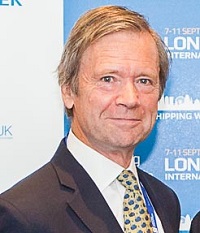 Jeffrey Evans, also chairman of Maritime London, said:
“I am delighted to have been asked to chair this important study by the government. Britain is a world leader in maritime, but we face increasing competition from abroad. With world trade set to increase significantly over the next 20 years, it is crucial that we investigate what more can be done to grow this key national asset to secure jobs and economic benefits for the UK.”
Shipping and ports minster John Hayes said:
“The UK maritime sector is a great success story, contributing billions each year to the economy and employing up to 260,000 people across the country, helping our island nation with daily life, from trainers to the food on our supermarket shelves. But we should not be complacent. I want to explore all we can do to grow the sector. The maritime growth study will look to maintain and enhance this achievement by ensuring the maritime sector can succeed in the future. We want to keep the industry at the heart of the government’s long term economic plan. A great maritime sector for a Great Britain.”
The maritime sector directly contributes up to around £14 billion to the UK economy and directly supports the employment of up to around 260,000 people. Industry figures suggest the sector could be contributing up to around £32 billion a year to the economy and supporting the employment of up to around 630,000 people when indirect effects are included.
Industry reacts to Autumn Statement
The UK government’s “Autumn Statement” has been generally welcomed by the shipping industry. The annual review of government spending covers tax, welfare and devolution proposals and the government also announced major commitments to road projects, including infrastructure improvements for seven major ports.
Maritime London chief executive Doug Barrow said:
“Successful ports need a solid road and rail infrastructure. The UK depends on the efficiency of its ports to compete in global markets and we welcome the government’s long-term commitment to the sector.”
 Meanwhile Maritime London member, the international accountant and shipping adviser Moore Stephens said the Chancellor’s statement is generally helpful for the shipping and offshore sectors. Its tax partner Sue Bill noted: “While there is nothing in the Autumn Statement 2014 which is of fundamental importance to the maritime sector, there are some changes which may be of interest to the shipping and offshore industries.”
“For example,” Ms Bill continued, “the remittance basis charge will increase for some non-UK domiciled individuals. For individuals who have been UK-resident for 12 out of the last 14 years, the charge will increase from GBP 50,000 to GBP 60,000. A new charge, of £90,000, will be introduced for individuals who have been UK-resident for 17 out of the last 20 years. In addition, the government will consult on making the election apply for a minimum of three years.”
“As expected,” she added, “the UK government will introduce legislation giving it the power to implement the OECD model for country-by-country reporting. These rules will require multinational enterprises to provide high-level information to Her Majesty’s Revenue & Customs on their global allocation of profits and taxes paid, as well as indicators of economic activity in each country.”
She concluded: “Overall, setting aside the changes for non-UK-domiciled individuals, this is generally a helpful budget for the shipping and offshore sectors. The new exemption from withholding tax on interest on qualifying private placements, while subject to further details, could make it easier for companies to raise finance without incurring withholding tax liabilities of up to 20 percent on interest payments. The continuing government clampdown on aggressive tax avoidance by multinational enterprises is not unexpected. Meanwhile, the new high-pressure, high-temperature cluster area allowance taking effect from 3 December 2014 is among a number of encouraging measures for the oil and gas sector.”
Jeremy Penn, chief executive of the Baltic Exchange commented:
“The increase in the Remittance Basis Charge in particular and the new £90,000 fee for longer-term non-domiciled residents is extremely unhelpful and a reversal of explicit undertakings provided by this government as recently as 2011.”
UK P&I Club launches self-assessment scheme
Maritime London member the UK P&I Club is trialling a new self-assessment scheme for its entered ships. The club says that the scheme is designed to help the club’s shipowner members take a more hands-on role in identifying and controlling the risk of accidents on their vessels – which in turn could help to reduce their insurance premiums.
The trial is the latest development in the club’s new claims-based approach to ship inspections. “Launched four years ago,” the club says, “the new approach focuses specifically on measures needed to control the most likely accidents on a ship as determined by the club’s unrivalled database of 12,000 major claims.”
Using ‘bow tie’ risk diagrams, the database reveals seven primary hazards and 76 common threats which, if not controlled in one or more of 450 ways, could result in a major claim. For instance, a primary hazard for cargo ships is carrying cargo at sea. Water ingress is a threat and, if not controlled by measures such as watertight hatch covers, the shipowner will be sued for wet damage.
According to loss prevention director Karl Lumbers: “Our bow tie approach has proved very popular with Members, with our inspectors being able to help them identify and control threats much more effectively. We have now modified the approach so that members can start using it and benefiting from it directly”.
Initially the Club will provide self-assessment facilities for up to 20 members, whose crews will score the effectiveness of 450 shipboard controls from 1 to 5.
Each member’s scores will be analysed by the club, with the effectiveness of each control being benchmarked. A formal risk assessment report will be provided to the member showing the overall risk percentage. Claims prevention advice will be made available to discuss any particular findings in the assessment.
“Where a members’ assessment of a ship reveals little difference in scoring with a gap analysis conducted by the club, there will be a reduction in the mandatory surveys required by the club on that ship,” says Mr Lumbers. “All that will be required is for the member to submit assessments of the ship every two years.”
He adds, “We hope the self-assessment scheme will enable participating Members to harness the wide experience gained by the club in many years of claims handling to the benefit of their own businesses. Additionally, we believe members will find that this practical and simple system will encourage crew members to take more pride in their professionalism and their ships.”
EU rules on CO2 “may complicate global agreement”, says ICS
The International Chamber of Shipping (ICS) says it is “disappointed and concerned” that the European Union is about to pre-empt negotiations taking place at the International Maritime Organisation (IMO) on the collection of data on CO2 emissions from ships, by unilaterally adopting a regional regulation which will apply to non-EU flag vessels, as well as ships registered in the EU.
The global trade association for shipowners notes that the EU’s Council of Ministers, the European Parliament and the European Commission are understood to have reached agreement on the text of an EU Regulation on the Monitoring, Reporting and Verification (MRV) of ships’ CO2 emissions, for formal adoption early next year.
ICS says that the industry fully supports the development of a global data collection system by IMO but the imminent adoption of a regional EU regime, which may not be compatible with whatever is agreed at IMO, will certainly complicate and perhaps jeopardise these delicate negotiations.
It points out that agreement at IMO will require the support of non-EU nations with which the vast majority of the global fleet is registered, including developing countries such as China and India for whom additional CO2 regulations are a politically sensitive issue.
ICS secretary general, Peter Hinchliffe said: “If the negotiations at IMO are to succeed it will be incumbent on the EU member states to explain that they are acting in good faith and that the outcome at IMO will be the product of a genuine global consensus achieved through negotiation rather than as a result of a pre-existing unilateral regional arrangement.”
A further complicating factor is the inclusion of data on cargo carried by ships in the EU Regulation. ICS says that this will need to be handled with particular sensitivity because of the suspicion that the intent is for this to lead to the development of a mandatory operational efficiency index. “This could be used by governments to impose financial penalties on ships, regardless of their actual fuel consumption and CO2 emissions, with the risk of a serious market distortion,” ICS warns.
The fact that IMO has already adopted a mandatory global regime of technical and operational measures to reduce shipping’s CO2 emissions – which entered into force in 2013 as a result of amendments to the MARPOL Convention – demonstrates that the UN body is eminently capable of developing a global CO2 data collection system.
London Club warning on “cappuccino bunkers”
The London P&I Club has advised its members on precautions to adopt to detect the presence of so-called “cappuccino bunkers”.
There are widely differing views within the shipping industry of the extent of this problem but, in the latest issue of its StopLoss Bulletin, the club explains that the cappuccino effect is essentially the frothing or bubbling effect caused by compressed air blown through the delivery hose. The aerated bunkers when sounded will give the impression that the fuel is delivered as ordered. In fact, after some time, when the entrapped air in suspension settles out of the fuel oil, the oil level drops and a shortfall is discovered.
The club says, “There are a number of ways in which cappuccino bunkers may be identified. These include signs of froth/foam on the surface of the fuel in the barge tanks when opening the gauge, and excessive bubbles on the sounding tape prior to, during and after bunkering. The bunker hose may also jerk or whip around, delivery rates may be slower than those agreed, and there may be a gurgling sound in the vicinity of the bunker manifold. There may also be fluctuations in pressure on the manifold pressure gauge, and unusual noises from the bunker barge.”
Outlining precautions that should be taken before fuel transfer takes place, the club explains, “During usual gauging of bunker barge tanks, fuel oil from ullage hatches should be visually checked for any foam on the surface. Foam may also be detected on the ullage tape. If entrained air is suspected on the tape or fuel surface, obtain a sample and pour it into a clean glass jar and observe carefully for signs of foam or bubbles. If the suspicion is confirmed, the chief engineer should not start bunkering and should notify the owners/charterers immediately.”
With regard to precautions during and after fuel transfer, the club notes that air can also be introduced in the fuel during the pumping period. This means it is important to continue gauging the ship’s tanks, as air bubbles would be readily seen on the sounding tape. It advises that, as stripping and line blowing can also introduce air, stripping should only be performed at the end of the delivery for a short period of time, and line blowing kept to a minimum. The ship’s bunker manifold valve should be checked shut before gauging of the ship’s tanks.”
Skuld offers all P&I products in London
Skuld, a leading Norwegian marine insurance provider is now offering all its P&I products from its London office, including Owners Mutual P&I / FDD and Charterers P&I / FDD.
Douglas Jacobsohn, Skuld President & CEO said: “Skuld is service driven and this latest move enforces our commitment to provide members, clients and brokers with the very best service in the business. We have seen significant growth in the past 10 years, and in addition to diversification, it is essential that we enhance and invest in local capabilities to support our members and clients with P&I products. The expansion of our capabilities and commitment in London is key to our continued growth.”
Skuld vice president, Matthew Burton, will lead this extended local London P&I.
Burton said: “Skuld in London has over the past few years expanded and developed into a very strong P&I underwriting and claims team servicing global offshore, yacht and fixed premium P&I clients. Along with P&I, Skuld London offers marine and energy cover for physical loss or damage, including hull, loss of hire, war, cargo and offshore and energy related insurance products through its syndicate at Lloyd’s Skuld 1897.”
London FFA brokers use Baltex
The Baltic Exchange’s electronic trading platform, Baltex, last week launched a Block Trade Facility which allows brokers to continue using LCH.Clearnet’s clearing services now that the London based clearing house has re-classified its dry bulk freight derivatives as futures contracts.
Baltex, which is regulated by the UK’s Financial Conduct Authority, is being used by FFA brokers Clarksons Securities, SSY Futures, ICAP Shipping and GFI to report their clients’ trades. It is only by being reported to a suitably regulated trading venue like Baltex that these trades can be considered as futures. The overall objective is to increase post-trade transparency in the dry FFA market.
Baltex Chief Operating Officer Paul Stuart-Smith said: “We are delighted to be working with most of the main brokers on this initiative and that Baltex is playing a vital role in helping the FFA market to adapt to regulatory changes. In order to make the transition to futures as straightforward as possible, brokers can continue to submit their trades for clearing in the usual way but these are now simultaneously reported to Baltex in real time via straight through processing. This initiative also helps to ensure that the Baltic Exchange retains its position at the heart of the global freight derivatives market and its importance in a rapidly changing regulatory environment.”
Rival platform Cleartrade is also processing iron ore, steel, coal, fertiliser and container trades.
Cleartrades CEO Richard Baker said: “This project extends the collaboration between CLTX and LCH.Clearnet, bringing real value to our clients, who seek efficient and unencumbered integrated trading, broking and clearing solutions. The classification of futures and our straight-through-processing (STP) link with LCH.Clearnet extends trading opportunities, removes risk and enables regulatory certainty for our global client base.”
Isabella Kurek-Smith, head of LCH. Clearnet’s freight and commodity markets said:
“Improving efficiency is frequently at the heart of regulatory change. Teaming up with Baltex and CLTX means that our members and customers benefit from the efficiencies associated with
using regulated trading venues.”
Carelessness costs money
Specialist intermediaries insurer ITIC has highlighted recent claims caused by careless errors.
In the latest issue of its Claims Review, ITIC cites the case of a ship agent which incorrectly calculated two pro-forma invoices in respect of port dues, using the cheaper rate for a cargo of malt, rather than the rate for the cargo of wheat booked for discharge from two ships. The wheat cargoes had been discharged, and the final invoices for port dues sent out, before the error was discovered.
The difference between the invoiced port dues and the correct port dues totalled EUR 14,000. But the owner refused to make up the shortfall because, relying on what it had been told, it had in turn charged the lower amount to the charterer. The claim was settled by ITIC.
Another case referred to by ITIC involved the submission by a port agent of all relevant cargo declarations in respect of a ship which had tendered notice of readiness in a Middle East port. These declarations included a document which the agent had translated into Arabic and English, and which described the cargo and the names of the consignees.
When the ship arrived, the only berth at which it could discharge was not available for a further ten days. Mistakes in the translation of the cargo declarations were subsequently noticed, resulting in a three-day delay in clearing the ship for berthing, which coincided with the last three days of the overall ten-day delay.
The owner claimed against the port agent for the full ten-day period of delay, arguing that the ship had not legally been able to berth due to the documentary error. ITIC helped the agent negotiate a settlement based on 50 per cent of the overall delay of USD 110,000, which ITIC paid.
ITIC says, “Errors such as these put pressure on commercial relationships. Attention to detail is important.”
More strike claims worldwide
Specialist marine delay insurer the Strike Club reports rising claims levels and warns that the claims climate has worsened considerably, announcing a 10% increase in shore-related risks. This, it says, reflects the many geopolitical challenges and tensions, particularly in Central and Eastern Europe, Africa and the Middle East, Asia Pacific and Latin America.
Bill Milligan, chairman and CEO of SC Management, said that new risks keep appearing, such as the Ebola crisis, leading to port closures and putting extra pressure on ship operators, and their crews, trading to West Africa.
Mr Milligan continued: “Not surprisingly, as a result of all this turmoil, the industrial landscape is scarred by strikes and other delay incidents which impact on shipowners and charterers. Lost time is a risk that is unavoidable, unfortunately, but insurance can help to some extent in protecting freight earnings or charter expenses.”
The club has called for a general increase of 10% shore-related risks for the new policy year commencing 1 February 2015, and a general increase of 5% for ship-related risks. In each case these increases will be additional to a full review of each member’s trades, exposures, cover, deductibles and record. The release call is set at 30%.
This was decided when the directors met recently in Paris to review the mutual policy years, and to discuss the future structure of the club following the announcement earlier this year that there were plans to seek a licence for a new mutual located in the UK to allow transferring the European business from Luxembourg.
Work on this continues, but members have been told that “it is already evident that while restructuring should in time bring operating efficiencies of benefit to the membership, the changeover and the other preparations to comply with Solvency II will involve significant expenditure.”
Mr Milligan said that the club’s claims records show that in the five years 2009-2014 the leading peril was closure of port or sea lane (17.9%), followed by collision (15%), stevedores’ strikes (13.7%), port workers’ strikes (11.5%) and machinery damage (10.2%).
Meanwhile, he added, strike and other delay incidents are proliferating. In recent months, for instance, some of the worst flashpoints have been in Canada (Vancouver), China (Ningbo), USA (Seattle and Tacoma), Australia (Port Hedland), Argentina (Rosario), India (Mombasa), Chile (various ports), France (Marseilles and Corsica), Israel (Haifa), and Costa Rica (Limon and Moin). There has been a 24-hour strike this week by port workers in Belgium, and a national general strike is being mooted for December 15.
In the US, there has so far been no new agreement on an employment contract that expired in July which covers dock workers at 29 West Coast ports. Manufacturers and retailers have warned that a port shut-down would cost the economy approximately USD 2 billion a day.
LR to class Maersk anchor handlers
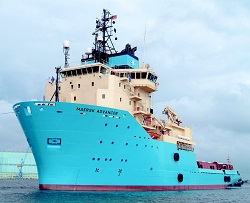 Lloyd’s Register is to class six Maersk Supply Service anchor handlers ordered at Kleven Verft with options on a further four vessels. The ships will be assigned Lloyd’s Register (LR) class notations 100A1, Offshore Supply Ship AHTS, Fire Fighting Ship 1 (2400), Ice Class 1A PS, RD (2.8), *IWS
Steel cutting is expected to begin in June 2015 with the first two vessels delivered in Q4 2016 and subsequent deliveries at two-monthly intervals thereafter.
“With this contract, Maersk Supply Service is once again placing a new building order in Norway, and with this we have taken the next step in our extensive new-building programme renewing our fleet with focus on large Anchor Handling Tug Supply and Subsea Support Vessels. The contract now concluded with Kleven is an important part of the realisation of our ambitious growth strategy,” says Maersk Supply Service CEO, Carsten Plougmann Andersen.
The Kleven order follows Maersk Supply Service’s recent order for four Subsea Support Vessels, also to Lloyd’s Register class, at COSCO Dalian.
BMT-designed Flex Ferries delivered
A trio of 38-metre Flex Ferries, built by Singapore’s Penguin Shipyard International and designed by Southampton-based BMT Nigel Gee, have been delivered to their new owner, Horizon Ferries, following successful sea trials in Singapore. BMT Nigel Gee is a subsidiary of BMT Group and a leading international design, engineering, science and risk management consultancy.
The BV-classed, Singapore-flagged monohull ferries – named “Horizon 7”, “Horizon 8” and “Horizon 9” – are among only a handful of fully compliant high-speed “2000 HSC Code” monohull ferries to be designed and built in recent years. The vessels recently commenced operations between Singapore and the Indonesian island of Batam, a ferry route that is generally regarded as the most competitive in Southeast Asia.
BMT says that, instead of competing on ticket prices, Horizon has chosen to differentiate itself from the other ferry operators through the innovative, efficient and economical design of its Flex Ferries, which is the second joint development project by Penguin and BMT Nigel Gee over the last two years. BMT Nigel Gee developed the full production design for Penguin to construct the three vessels, with a time scale of only 12 months from design commencement to delivery. In order to meet the aggressive build schedule, the design was developed in close co-ordination between the project partners.
Ed Dudson, technical director of BMT Nigel Gee stated “The success of the Flex Ferry reinforces the strong ongoing relationship between BMT Nigel Gee and Penguin. These three vessels demonstrate that the partnership between the two companies can provide high quality vessels within an extremely short time scale.”
Baltic Exchange announces training course dates 2015
The Baltic Exchange’s programme of freight derivative, ship finance and maritime economics training courses has been announced. The programme sees courses taking place in London, Singapore and New York. Delivered by lecturers from London’s Cass Business School, the courses provide a mix of theory and practical case studies. Topics covered include freight rate risk management, hedging and trading strategies using FFAs and freight options, the fundamentals of shipping investment and IPOs.
See www.balticexchange.com/other-services/training-2/ for full details.

